
Raise Confident Kids | 3 Essential Beliefs for Emotional Health
Apr 15, 2026Follow the Show
Apple Podcasts | Spotify | Everywhere else
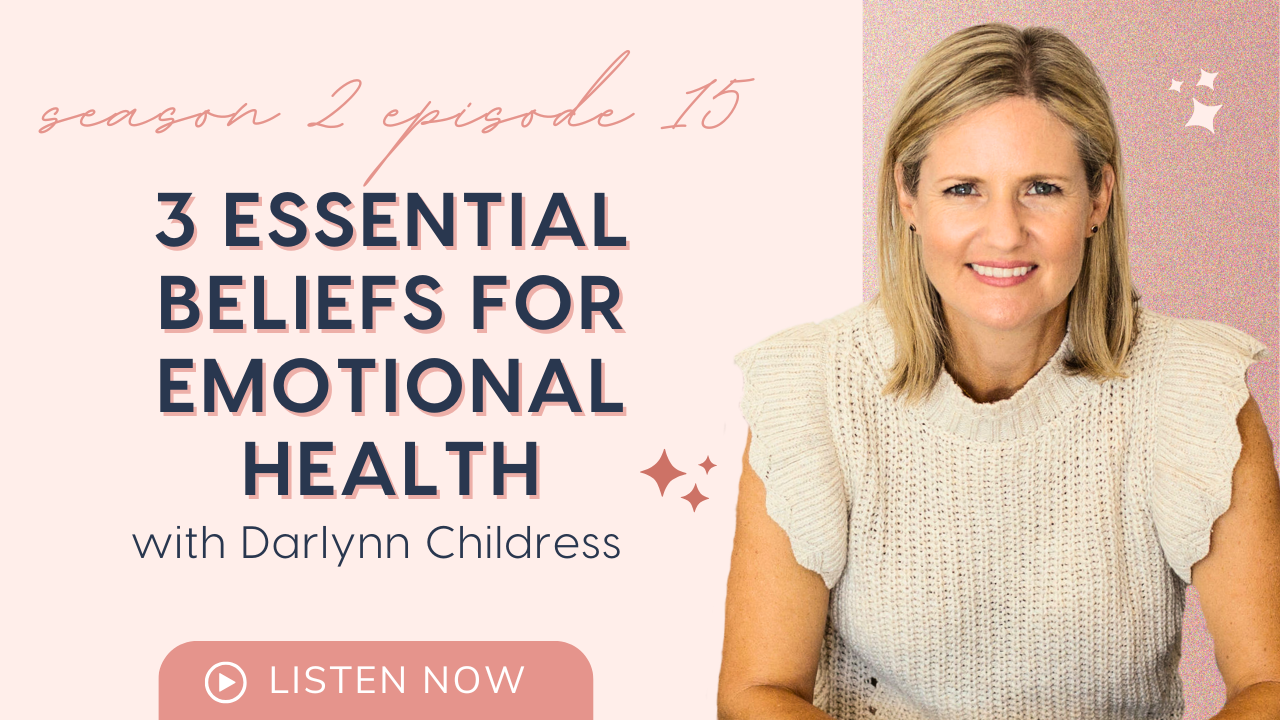
It’s a big question (especially when your kids are little) - What would I be doing to set my child up for success in adulthood? We all want our kids to thrive and be well. Today, I’m sharing the 3 essential beliefs kids need for emotional health.
This episode breaks down the key ingredients to helping your kid become emotionally healthy and resilient - now and as an adult. These are the beliefs that help ensure your child grows up to have good self esteem, take risks, think for themselves, be responsible, and have good relationships with others and with their own body.
The three essential beliefs are:
- I am safe.
- I’m lovable.
- I am capable.
Each person comes into the world preset to believe these things. They want them to be proven true. The problem happens when they start to get different messages or they have experiences in childhood happen to them and that are never explained.
Your child's earliest years (between 0-5) set the groundwork for their subconscious beliefs about themselves and the world. And those beliefs are reinforced up until around age 12. They are absorbing messages all the time about themselves and the world based on their environment and their interactions with you.
You have a lot of influence over your child's beliefs about themselves. When you can reinforce these essential beliefs in them - showing them that they’re safe, lovable, and capable - they get the message and carry those beliefs with them into adulthood.
Belief #1: I am safe.
This is the belief that I am safe, and the world is safe. I don't need to worry so much about my needs. I can relax in my environment, and from that relaxed state I can go and try and do hard things and take big swings in the world and live my life.
Why it matters
Babies cannot meet any of their own physical needs, so they trust and rely on us to care for them. This is the beginning of building safety. “The grownups in my world are safe.”
As they get a little older, safety becomes not only physical but also emotional. They want to know that you can handle their big feelings. You are the person who will protect, not harm, them. They don’t need to be scared of you.
The idea of safety also shifts as we see more behaviors. They might start to see safety as conditional. That they are safe and cared for as long as they act a certain way. It can also be based on the adult’s emotional capacity, patience, etc. When their safety is in question, the child becomes hypervigilant and aware. They’re always looking around trying to figure out, “Am I safe?”.
Without a core belief that the world is safe, we start to see things like anxiety, dissociating, seeking safety in relationships (or rejecting relationships), and other unhealthy behaviors.
What to do
The goal, then, is to be a physically and emotionally reliable caregiver for your child. This means regulating your nervous system, so that you can be calm and reinforce these core beliefs.
Boundaries and rules are also important to creating a sense of safety. We don’t want to be too harsh or rigid, but predictable routines and limits help kids know what to expect and show them that their adult is going to do what they say they will do. I like to think of these rhythms as a metronome in the background of life.
Belief #2: I’m lovable.
You can also think of this belief as “I'm good enough”. We want our kids to walk through the world believing that they're good enough exactly as they are. That they're worthy of love, and you accept them unconditionally.
Why it matters
Kids have a really hard time separating themselves from their behavior. So when you communicate that you don’t like how they’re acting, it can be confusing. They can take it to mean that you don’t like them. Or that you only love them when they’re behaving a certain way.
This means that you have to actively communicate to them that they're lovable no matter how they act, that they are good enough, and that you accept them exactly as they are. They don't have to do anything or be anything different in order to receive your unconditional acceptance. They can't earn your love, and it can't be taken away.
When a child goes through life thinking that they're not good enough or they're not lovable, they show up with a lot of people pleasing behavior. They may be perfectionistic. They may deny their own needs or their own ideas. They might squash down their creativity or intuition because they think they need to show up in a certain way in order to be accepted by the adults in their life.
What to do
One of the really difficult thoughts for us to work through as parents is, “I love my kid, but I don’t like them right now.” We have to actively work on shifting that to, “I like my child no matter how they act.”
Let’s be honest, this is more challenging with some kids than others.
One of my favorite tools is called a Delight List. You write out a list of things that you like about your kid. Then, you can communicate to them, “I like you”, “I find you delightful”, “You're my kid and I enjoy having you in particular as my kid”.
I want to clarify one thing: Unconditional acceptance does not mean that we’re letting misbehavior slide. The difference is in the way that we communicate boundaries and consequences. It’s the frustration, blaming, anger, and shame that we’re getting rid of. You can have compassion for why your child might not want to follow a particular rule, while also being firm.
Remind yourself that they are still learning how to follow directions, delay gratification, and control their impulses. They’re little, and they’re figuring it out.
Belief #3: I’m capable.
This is the belief that I can handle things, I can figure stuff out, and I know how to take care of myself.
Why it matters
In order for your child to believe that they are capable of learning, growing, doing new things, and mastering new skills…they have to make mistakes.
And this isn’t just about learning to clean up their messes or tie their shoes. There’s so much growth going on beneath the surface. Kids are also learning how to manage their nervous system, regulate their emotions, delay gratification, and understand cause and effect.
They’re going to make a lot of mistakes.
If you get frustrated and angry when they make those mistakes, you end up communicating to your child, “You’re not good enough, and it doesn’t seem like you’re capable.”
What to do
Normalize misbehavior and mistakes. Make sure your child understands that they’re not “bad” when they mess up. They’re still learning. This means that you want to create an environment where it’s normal to not know how to do everything.
When you start to feel frustrated, try looking at your child’s behavior through a different lens. Where is that behavior coming from? Is it emotional immaturity? Physical immaturity? An immature nervous system? Lack of skill? If you can see your child's behavior from a neutral lens (or even a compassionate lens), then you can be compassionate towards them.
Adopt a growth mindset that your kid gets to be a beginner. They get to work towards higher and higher levels of skill. They won’t be good at everything (including behaving), and that’s okay.
Coaching Your Kid Through Negative Thoughts
Sometimes kids will share with you the negative thoughts that they have in their heads. They might think things like:
- You don't love me
- You hate me
- I'm stupid
- No one likes me
- I'm a bad boy/girl
- Everyone is mad at me
It can be difficult to hear that your child is thinking these things. But it is beautiful that they feel comfortable sharing those thoughts with you. And it gives you the opportunity to coach them through it.
Here’s how:
- Validate their feeling. Narrate back what they said to you. Name to emotion(s) you think they might be feeling. Ask them, “Are you thinking…?” “I wonder if you’re feeling…?” Let them know that the way they’re feeling makes sense.
- Don’t get defensive or minimize or dismiss what they’re telling you. Instead, you can mirror back to them, saying something like:
- “I know that you're safe. I would never let anybody hurt you.”
- “I know how I think. I know that I don’t hate you. I love you no matter how you act.”
- “I know for sure that you’re capable of doing your math homework. Mistakes happen. You’re still learning, and that’s okay.”
- Allow time for them to regulate. Maybe they need a little hug from you or to move their body a bit.
- Coach the mind. Explain that those negative thoughts come and go, like clouds in the sky. They don’t have to stay.
Here’s the underlying message:
Hey, you know what? You're safe in this world and in this family and in this environment. No matter how you act, you're lovable. I'm going to know you're capable even when you make mistakes. I'm here to support you no matter how you act.
And just in case no one has ever told you, I want you to know that I know that you are safe, you are lovable, and you are capable. And you are actively becoming the parent that you want to be.
You’ll Learn:
- The 3 essential beliefs that help ensure your child grows up to have good self esteem, take risks, think for themselves, be responsible, and have good relationships
- What you can do to support these beliefs in your kid
- Practical examples of how to reinforce these beliefs, even when your child is misbehaving
- How to coach your kid through negative thoughts
Ready to stop yelling?
Get the one simple tool you need to stop yelling at your kids, so you finally feel calmer and connect better.
You'll learn why you yell, how to stop yourself yelling, 40 things to do instead and scripts for what to say to your kid when you yell.
